The Outbound Illusion: Why Sending More Emails Is Killing Your Growth in 2026
For years, outbound success was measured in volume. More emails, more follow-ups, more sequences and more accounts. The logic felt simple: increase activity, increase opportunity. That equation no longer works.
Between 2024 and 2026, outbound sales underwent a quiet but permanent transformation. Inbox providers didn’t just upgrade spam filters they upgraded intelligence. Gmail, Yahoo, and Microsoft now analyze behavioral patterns, engagement signals, and sending consistency. They evaluate not just what you send, but how you send it.
The result? Many founders believe their messaging “doesn’t work,” when in reality, their infrastructure is quietly suffocating their deliverability.
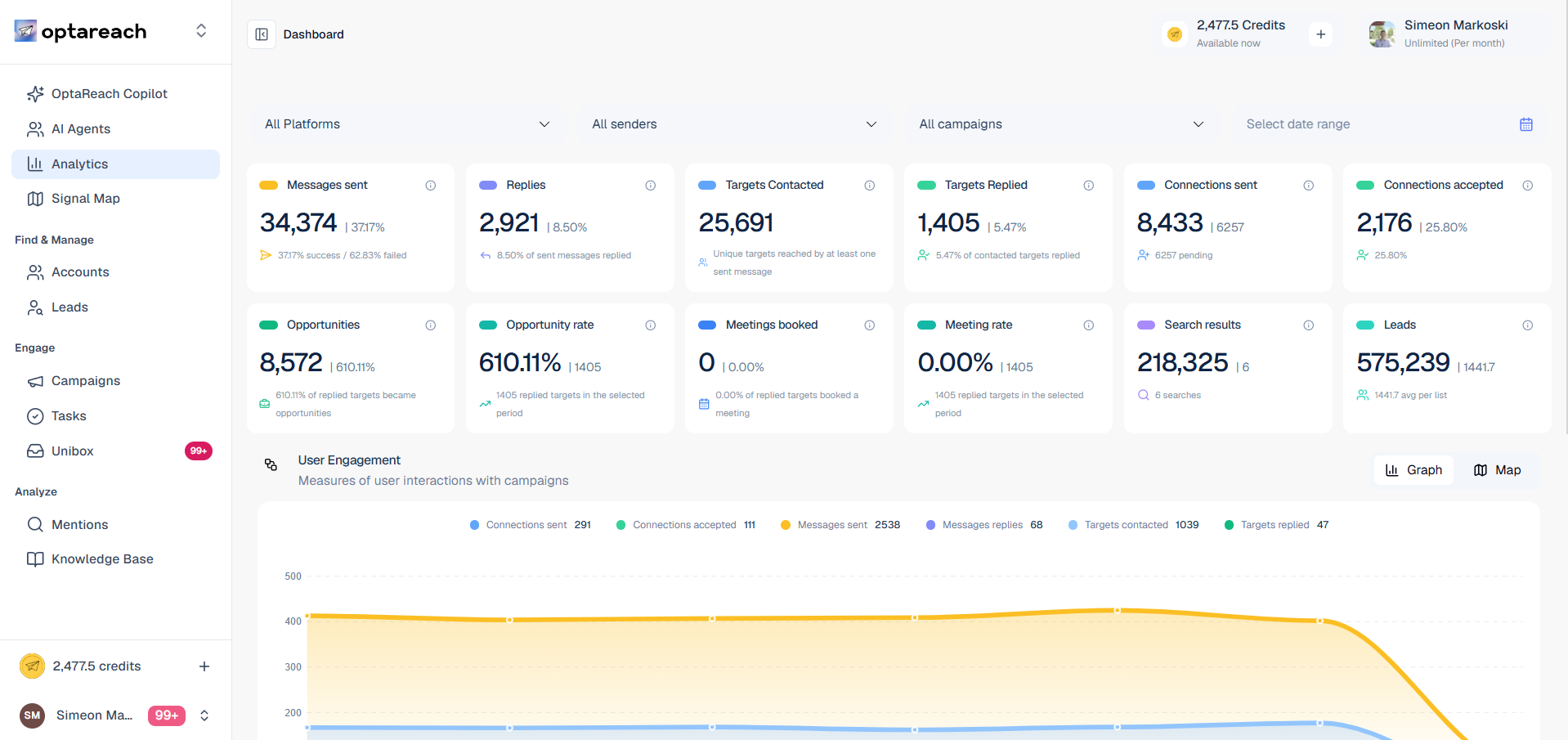
At OptaReach, we see it constantly: teams pushing thousands of emails per week while wondering why reply rates collapse. It isn’t a copy problem. It isn’t even a market problem. It’s a precision problem.
Outbound in 2026 is no longer a volume game. It’s a discipline.
The first shift is structural. You cannot scale from a single inbox anymore. Sending 150–200 emails per day from one account isn’t aggressive it’s reckless. Modern outbound requires distributed sending, segmented domains, and careful pacing. Smart teams separate outbound domains from their primary brand to protect reputation. They scale horizontally by adding controlled infrastructure rather than vertically by increasing daily output.
Deliverability today is reputation management. Once damaged, it’s slow and painful to repair.
The second shift is targeting. Massive lists used to feel powerful. Now they are expensive noise. Buyers have grown immune to generic outreach because they receive it constantly. A prospect doesn’t respond because you automated a first name variable they respond because timing meets relevance.
When a company just raised funding, expanded departments, launched a product, or started hiring for a role connected to your solution, the conversation becomes contextual. It becomes timely. It becomes logical. That is why micro-segmented campaigns consistently outperform broad ICP blasts. Relevance now drives response, not personalization tokens.
Another critical change is how automation is perceived. Automation used to create leverage. Now, when misused, it creates pattern recognition. Filters track cadence, repetition, and engagement decay. If your system enrolls thousands of leads into rigid sequences without qualification or behavior-based adjustments, you aren’t building pipeline you’re training algorithms to distrust your domain.
Smart outbound systems behave dynamically. They adapt based on engagement. They slow down when signals weaken. They prioritize quality over saturation. Automation without strategy is just spam at scale.
Follow-ups have also evolved. The old “fortune is in the follow-up” mentality pushed teams toward aggressive sequences six, seven, even eight touches. But modern inbox systems interpret that behavior differently. Excessive persistence now reduces long-term reply probability and increases spam classification risk.
In today’s environment, three thoughtful touches outperform eight repetitive nudges. If there is no engagement, stepping back preserves reputation. Re-entering months later with new context is far more effective than forcing urgency into an uninterested inbox.
Then there’s the CTA problem. For years, outbound defaulted to asking for time immediately. “Do you have 15 minutes?” became the standard close. But time is the most guarded asset in business. Asking for it before delivering value creates friction.
High-performing campaigns now flip the dynamic. Instead of requesting a call, they offer something tangible a tailored idea, a specific insight, a mini audit, a refined strategy angle. The call becomes a value delivery session, not a sales pitch. That subtle shift dramatically changes how prospects perceive intent.
What all of this points to is one truth: outbound is no longer tactical. It is operational.
Success depends on infrastructure health, domain protection, behavioral pacing, contextual targeting, and value-first communication. It requires treating reputation as capital and conversations as assets.
Cold email is not dead. But careless outbound is.
In 2026, scaling means engineering trust at every layer technical, strategic, and human.
At OptaReach, we focus on building outbound systems that operate with precision. Systems that protect domains. Systems that prioritize relevance. Systems designed to generate conversations without sacrificing long-term deliverability.
Because modern outbound isn’t about sending more.
It’s about earning attention consistently, intelligently, and at scale.
Author

We share hands-on outreach tactics, campaign learnings, and product updates to help you automate smarter and build stronger relationships with your audience.