The Death of the 'Frankenstack': Why Unified Outreach Platforms are Winning in 2026
For the past five years, the "cool" way to build a B2B sales engine was to...
The Death of the 'Frankenstack': Why Unified Outreach Platforms are Winning in 2026
For the past five years, the "cool" way to build a B2B sales engine was to buy the "best-of-breed" tool for every tiny task. You had one tool for LinkedIn scraping, another for email warming, a third for Reddit monitoring, a fourth for X automation, and a fifth to "zap" it all into your CRM.
In the industry, we call this a "Frankenstack." And in 2026, the Frankenstack is officially dying.
As agency margins tighten and AI requires cleaner data to function, the cost of managing a fragmented tech stack has become a "growth tax" that most agencies can no longer afford to pay.
The Hidden Costs of a Fragmented Stack
It’s not just the $49/month subscriptions that add up. The real costs of a Frankenstack are invisible:
- The "Data Tax": When tools are connected via APIs or Zaps, data gets lost. A prospect might unsubscribe from your email tool, but your LinkedIn tool doesn't know, so it keeps messaging them. This leads to brand damage and "spam" reports.
- The "Context Gap": If your SDR has to check four different dashboards to see a prospect's history, they will miss the "intent signal" that leads to a close.
- The "Integration Fragility": Every time LinkedIn or Gmail updates their API, one of your connections breaks. You spend your Monday mornings fixing workflows instead of closing deals.
The 2026 Pivot: Unified Revenue Workflows
Leading agencies are moving toward Unified Platforms—systems built from the ground up to handle the entire multi-channel journey in one place.
According to 2026 market predictions, organizations are consolidating from an average of 12 tools down to 4 or 6 integrated platforms. Why? Because when your data lives in one place, your AI actually works.
Why OptaReach is the "Anti-Frankenstack"
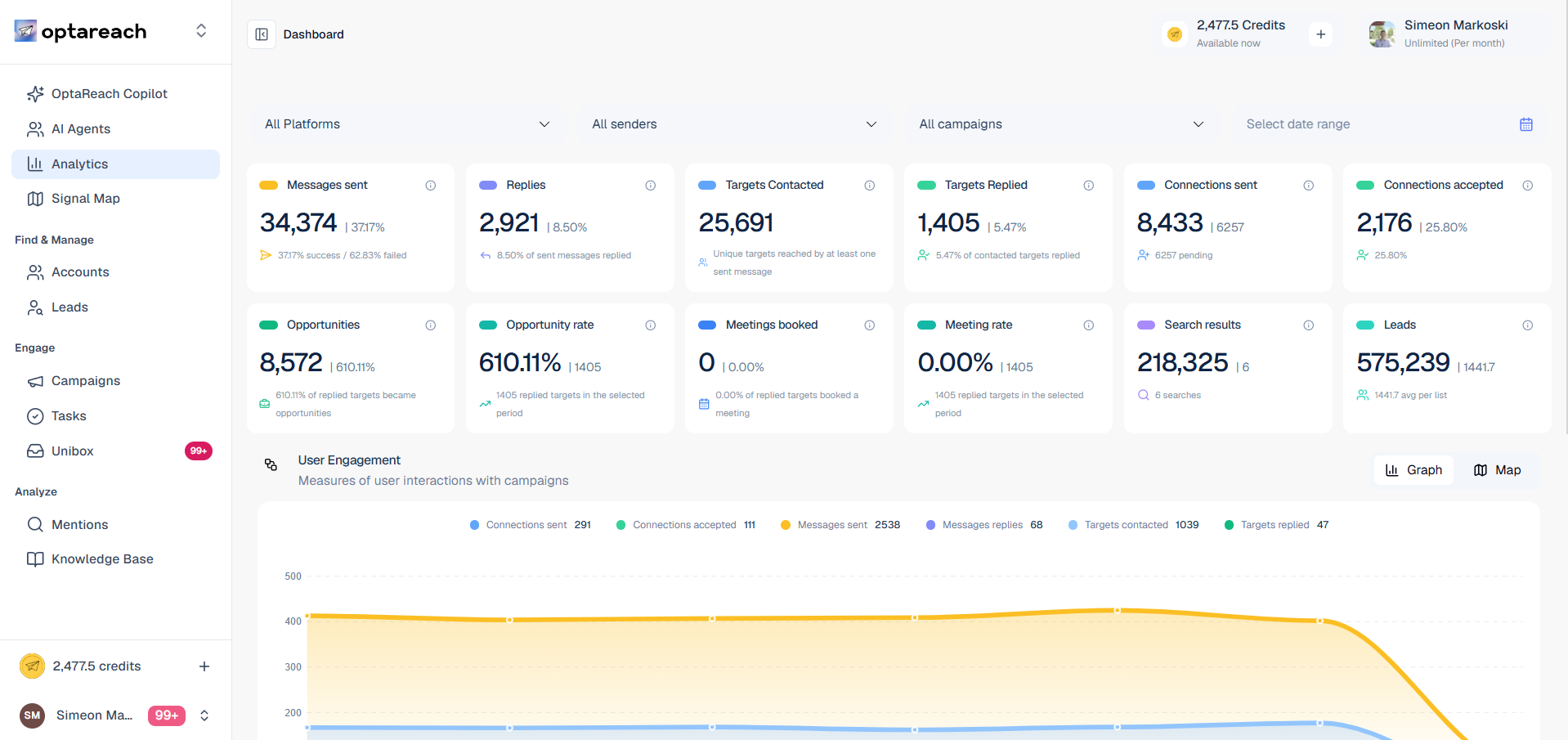
OptaReach wasn't built as a collection of features; it was built as a single, unified "Sales OS."
- Native Multi-Channel: We don't "integrate" with LinkedIn and Reddit via 3rd-party plugins that break. Our engine is built to manage these channels natively, ensuring a 100% sync rate across your entire sequence.
- The Single Source of Truth: When a lead engages with you on X, that context is instantly available in the Email composer. There is no "syncing" required.
- AI Orchestration: Because OptaReach sees the whole customer journey, our AI can make smarter recommendations. It doesn't just suggest an email subject line; it suggests the best next channel to use based on where the prospect is actually responding.
The ROI of Simplification
Agencies switching to a unified platform like OptaReach typically see:
- 15% Increase in ROI: By eliminating "duplicate" subscriptions.
- 5-7 Hours Reclaimed per Week: By removing the need for manual data syncing and "tool hopping."
- Higher Forecast Accuracy: Because your data isn't scattered across five different "silos," you actually know which leads are likely to close.
Conclusion: Simplify to Scale
In 2026, the winner isn't the agency with the most tools; it’s the agency with the most coordinated tools. If you are spending more time managing your tech stack than talking to prospects, it’s time to kill the Frankenstack.
Stop "stitching" your sales process together. Start unifying it.
Suggested Image Alt-Text:
Author